
How Loud to Play Your Hi-Fi?
This is an interesting question, and makes us consider what we are trying to accomplish when we play a recording via our precious Hi Fi equipment. I’d suggest that the most important judgment to make is also based on what the music genre is, Rock or Dance music with a high proportion of drum and rhythm instruments will probably make most listeners want to use higher sound pressure levels, whereas simpler acoustic music – without amplifiers or other instruments of naturally high dynamic range – such as a piano, might sound more natural at lower sound pressure levels.

The optimum sound pressure level for playing music will also depend on some other fundamental factors, including personal preference, the dynamic capabilities of the equipment, and considerations for the comfort of the listener’s hearing.
Some other factors to consider are the specifications of the hi-fi system, particularly the power rating, and also the sensitivity of the speakers. It’s important to ensure that you don’t exceed the maximum power handling capacity of the whole system to avoid distortion or damage. Room Size and Acoustics play a part in where to start with the volume control, the size and the acoustics of the listening room can both affect the sound pressure level. In a larger room, you might need more power to achieve the desired volume without distortion. The acoustic in the room will also have an impact on how loud the system feels, a live and reflective room acoustic will energize more easily than one damped with soft furnishings and drapes.
The Listening Distance will definitely impact on how loud the program feels, sound pressure decays as an inverse square, so near field listening demands lower system power for a given loudness: A closer listening position will definitely feel more dynamic, but may not convey much of a scale or much in the way of spatial clues.
Everyone will have different preferences for listening volume. It’s probably best to adjust the level to a point where it’s enjoyable for you – but without causing discomfort or hearing damage. The Occupational Safety and Health Administration (OSHA) suggests limiting continuous exposure to 85 dB or lower. You might find that an SPL meter App for your phone can be helpful, especially when comparisons of equipment are being carried out, so that levels can be matched consistently.
Music Genre: Some genres may naturally have louder or quieter recordings. Adjusting the volume to suit the dynamics of the music that you’re listening to can be frustrating with music that has a wide dynamic range, and this maybe why modern Pop mixes are all fairly compressed – although the compression is at a high average level, so that the music grabs and retains the listeners attention, but ultimately leaves the listener fatigued as the dynamics are actually reduced. In many cases where the listener turns the gain (volume) up, then dynamics might very well actually be reduced, as the system can easily run out of headroom- or it’s ability to keep increasing in sound pressure level. But if this then leads to distortion then this may then induce the release of endorphins in the listener – as the tell tale distortion can trigger memories of a memorable live event – or an enjoyable social occasion like a night club or disco.
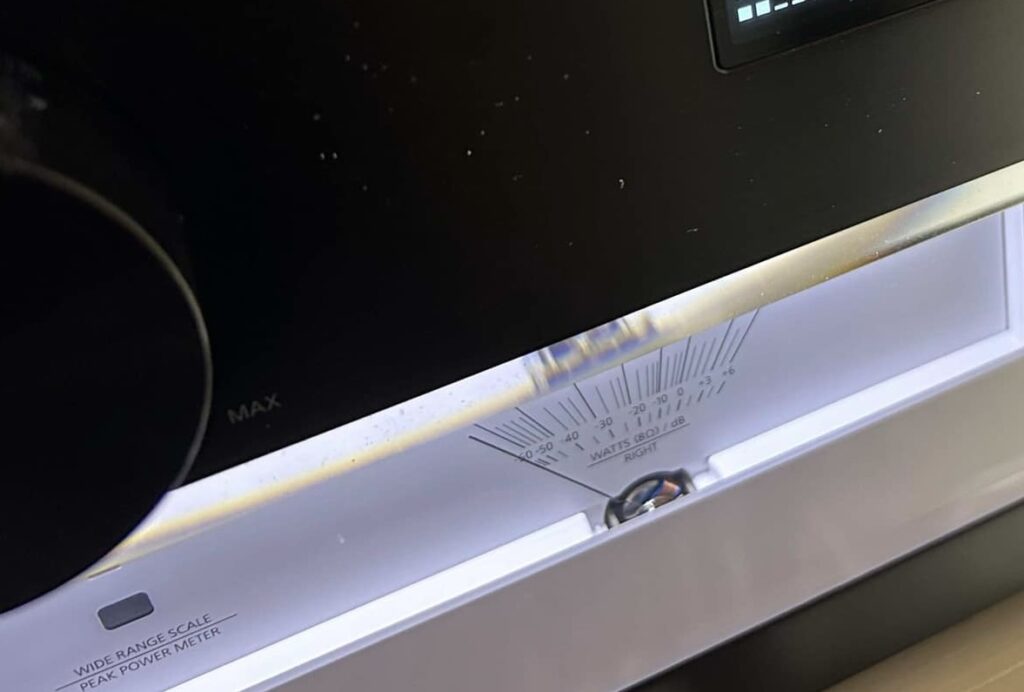
Ultimately, the optimum sound pressure level is a subjective choice that balances the factors of not running out of power of system dynamic bandwidth, but still achieving the most realistic sound pressure levels whilst listening, and still experiencing high quality sound and detail too. A personal bugbear is hearing other people’s systems (usually at HiFi shows or shop demonstrations) with the volume level cranked up past the point where system limitations have become obvious. Most people are smart enough to avoid distortion due to amplifier clipping (which soon destroys tweeters), but I’ve lost count of the times I’ve had to endure speakers being driven close to their limit and causing compression – all the dynamics of the music is then lost.
It’s probably good advice to start at lower gain setting, and to gradually increase the spl until you find the level that suits your preferences, and that retains the uncompressed acoustic realism – but without undermining the illusion of a real musical event.
Leave a Reply