
Stylus Types & Profiles
Stylus types & profiles: What do the more expensive stylus types bring to the party?
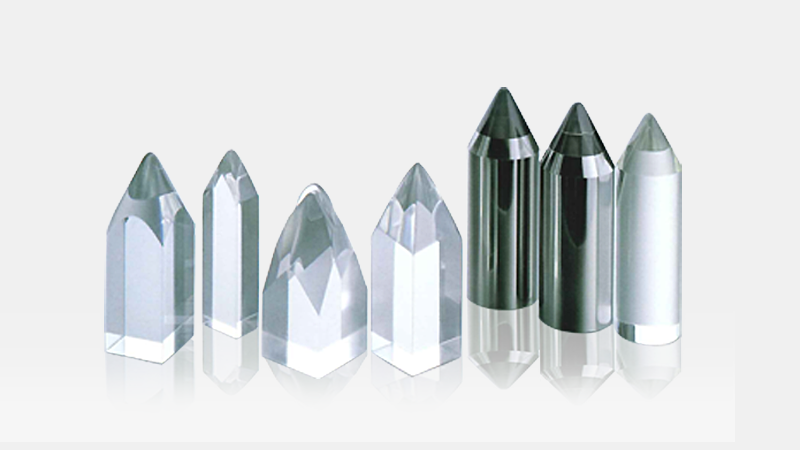
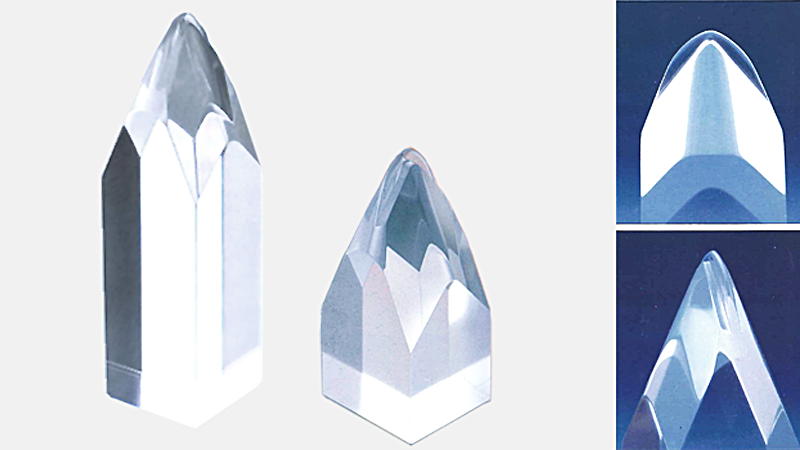
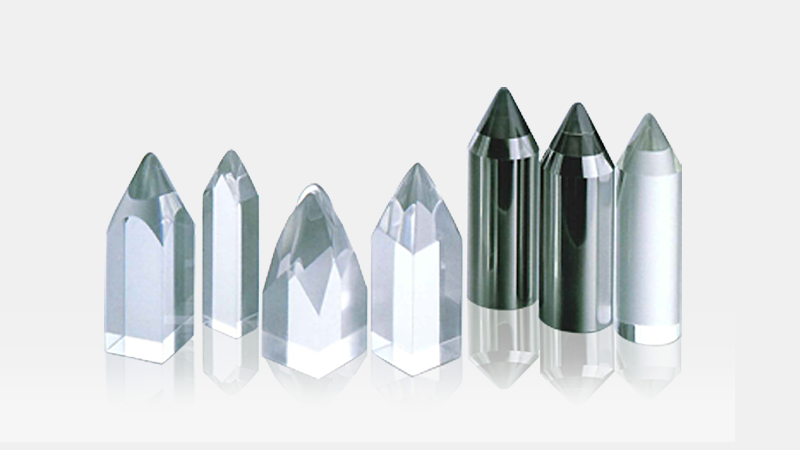
For demonstration purposes, Audio Technica commissioned these CNC made models of various stylus types. Catch them at an audio show and you’ll be able to see and even handle them to better understand what a particular stylus is all about.
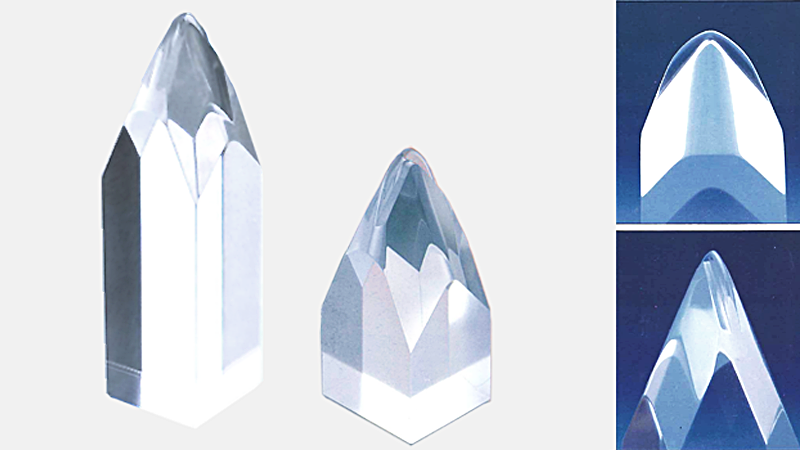
If you’ve every wondered why some people spend a hundred pounds plus on a stylus for a Moving Magnet cartridge and can’t understand why anyone would want anything better than the £30 – £40 stylus you have, then read on.
All other things being equal, better (more expensive) stylus types can bring you closer to what was originally recorded on the disc. This can most clearly be demonstrated with a cartridge which is offered in a range which has different stylus types available to fit the same generator (or ‘body’) such as the VM95 range from Audio Technica. A read through our Review of the VM95 range will explain how they each sound or perform, but this article will attempt to explain WHY some stylus types perform better than others. Of course, there are many design factors which make a difference to a cartridge’s performance, but here we’ll focus on just on the diamond stylus itself.
Cheap/budget styli (typically less than £50) generally use so called ‘bonded styli’ or ‘shank diamonds’ and are made by taking a tiny chip of industrial diamond material and bonding it to a small steel pin (or ‘shank’). The profile (usually the simple ‘conical’ or the only slightly more complex ‘elliptical’) is ground onto the end and it is the diamond part which traces the record groove. These are inexpensive, and do the job well enough for a budget system. If every part of the cartridge is well designed, they can often be surprisingly good and fantastic value for money.
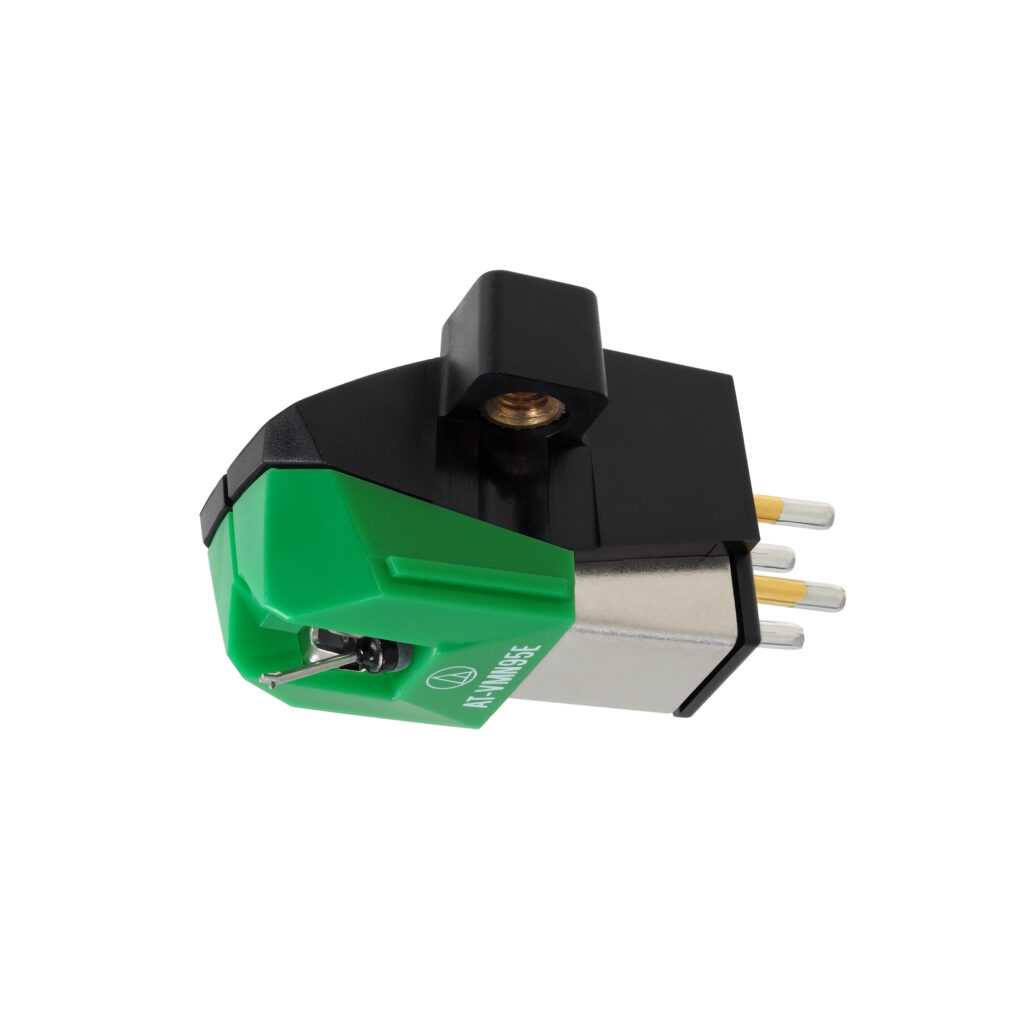
Having a bonded interface between the steel and diamond isn’t ideal (it causes something called ‘phase inversion’ above a particular frequency within the audible range) and most of what you think is the ‘stylus’ when you look at it with a magnifying glass is really the steel pin. Apart from being cheaper than diamond; steel is considerably more dense than diamond and so the whole thing weighs much more than an equivalent piece of diamond.
And when it comes to tracing the high frequency modulations on a record, you really do want the lowest possible mass for the tip in order to allow it to be accelerated back and forth at perhaps as much as 18 thousand times per second. Higher mass tips just won’t do it’ (or at least not at all ‘faithfully’).
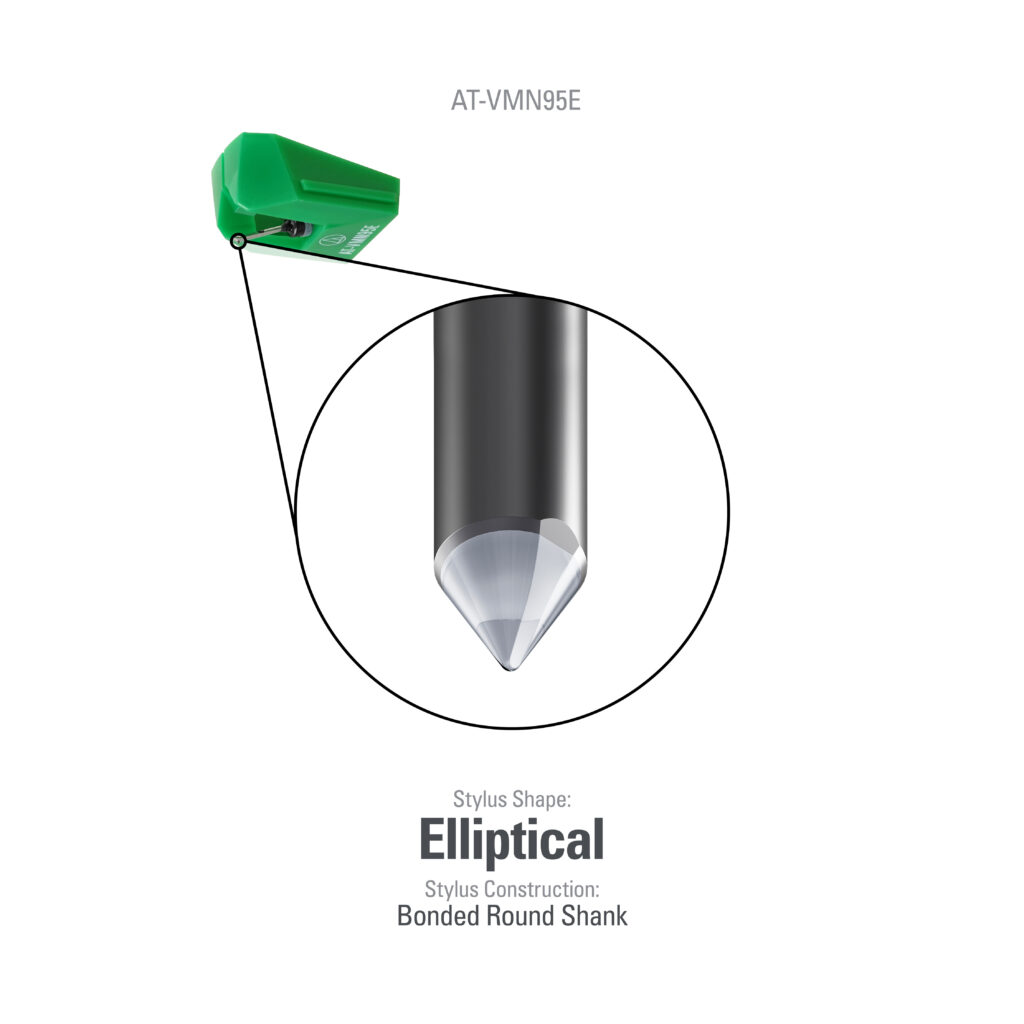
Proper HiFi styli start with what are called ‘nude mounted’ types. This means that a whole piece of diamond is mounted on the end of the cantilever. This used to be ‘low quality gem’ type diamond material, but these days is more likely to be synthetic (manmade) diamond. In fact this is no less expensive than natural diamond of the relevant size, but, being man made, can be manufactured in good quantities to consistent sizes and with the grain orientation going the right way to ensure that wear in use is minimised. Yes, the rate of wear changes according to the grain orientation.
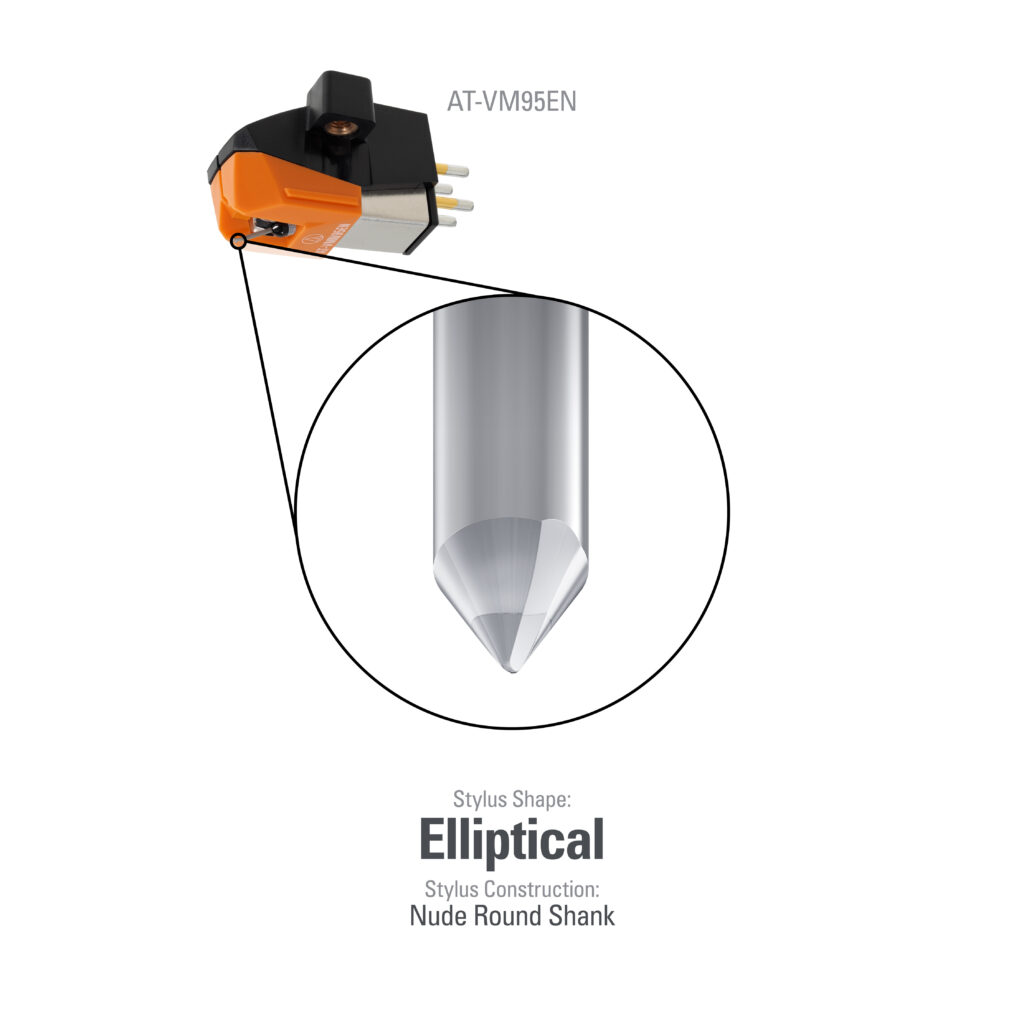
So, a bonded elliptical stylus (at say £26) and a Nude elliptical (perhaps £100) could have the same profile, but the latter has a tip which is all diamond and will track higher frequencies better due to its lower mass. It will also last longer (all other things being equal). In listening, the difference will be a better ‘soundstage’ (by virtue of better rendering of the higher frequencies of the recording) and more detail and nuance to the music.
For example, the striking of a cymbal actually sounds like what it was; not just a vague ‘tizz’ sound. That’s what better reproduction is all about.
After ellipticals, come the more expensive stylus profiles. These still feature a nude mounted diamond, but with more complex profiles ground onto them to better trace the groove created by the cutter when the master was cut from the master tape.
A lot of work went into the development of these profiles in the 70’s when quadraphonic replay was being developed (and even video recording/reply on vinyl discs was contemplated!). This resulted in stylus profiles which could track groove modulations well above the audible range.
What good is that to me? you might ask. Well, a stylus that can track to around 30Khz will take the upper part of the audible range in its stride. These more advanced profiles have names like: ‘Vital’, ‘hyper elliptical’ ‘Microline’, ‘Shibata’, ‘SLC: Special Line Contact’ Paratrace, Fritz Geiger, Van Den Hul, Wein Paroc, Ogura etc etc and some of these can be found on the better Moving Magnet cartridges and Moving Coil cartridges costing from £500 to £5000+.
In fact, some of the above-named types are similar in form to others and the differences are often down to one manufacturer trying to work around the patents, design rights or other forms of intellectual property of a competitor’s design.
All the most complex stylus shapes are trying to find a way of better following the undulations of the groove wall which were originally made by the cutting tool of the lathe which cut the original master. The stylus can’t be exactly the same shape as the cutter – it has a different job to do (‘reading’ rather than ‘writing’). The simple conical or elliptical profiles touch each of the two groove walls at only one tiny spot (think of a ball bearing in contact with a steel plate). In theory, this spot is infinitely small, but in practice is enlarged because of the elastic deformation of the vinyl material that takes place.
The more complex profiles attempt to have a footprint which is elongated up the wall of the groove on each side (hence the name ‘line contact’). This increase in contact area gives a reduction in contact pressure which has several benefits including record and stylus wear rates. Such profiles also reach further down into the groove and people often remark that records which have become worn or damaged by play in the past can sound surprisingly decent when played with these more complex stylus types.
Gary Hargreaves and I once found a disc in his collection which had a tiny burn mark on one of the tracks apparently caused by an accident during his student days (the clue to the ‘accident’ is that it was a Reggae recording). While using this track to review and compare various stylus types, we found that the stylus was always ejected from the groove and into the adjacent one at that point – except for when the Paratrace stylus was used. Even at the same tracking force, the Paratrace was able to ride the groove past the defect with only the slightest single ‘click’ as evidence of the damage.
The Microline (or Microlinear) stylus is interesting as its form, when viewed under a microscope, is seems too complex to have been formed by traditional ‘grinding’ operations alone and seems to have been created by laser ablation of the piece of diamond stock. The micro ridges it features track the groove walls superbly until it is finally worn out, at which point performance drops off markedly.
In the Audio Technica Moving magnet cartridge ranges, they use a selection of the above type and profiles and the hierarchy is: Nude Elliptical, Microline, Shibata and SLC at the top. At each step up, the listener will generally notice improvements in soundstage, reduced surface noise and better ‘musical timing’ all of which are nothing more than more faithful reproduction and hence a better listening experience.
If you have read the above and want to see what a better stylus might do for your listening enjoyment, then ask us for advice on how to experience a step up in reproduction quality. We generally have ‘loan’ stylus assemblies available which you can try at home. But be warned; to try one is to want one.
If you are enjoying the performance of your bonded conical or elliptical and are not worried about squeezing the last morsel of fidelity out of your system; then put another record on and rest secure in the knowledge that a ‘dusting accident’ won’t cost you more than a couple of drinks for a replacement stylus.
Credits:
All the images in this article are the property of Audio Technica who do more than any other company to help customers understand the critical role played by the different stylus types. Unlike some manufacturers, they are always clear about whether you are getting a ‘bonded’ or ‘nude’ diamond on any particular product. The image of the lineup of stylus profiles is of a series of models that Audio Technica have created and these can usually be seen (and handled!) at Hifi shows and exhibitions they support. Well worth seeing in the flesh!
Some of the information in this article comes from the excellent paper ‘Low-Mass 4-Channel Discrete Diamond Tips with Shibata, Paroc Or Pramanik Cut by Ernst Fr. Weinz. Presented to the 54th Convention of the Audio Engineering Society in May 1976’. Copyright prevents us republishing the whole paper here but I’ll be happy to point anyone towards it if they are interested. It is a fascinating read and has some excellent pictures of styli and groove modulations taken with a Scanning Electron Microscope.
Ernst Fr. Weinz was the maker of the Paroc stylus profile which was used on early versions of the A&R Cambridge P77 which readers may remember from the early ‘80s (later versions of the P77 used the Paratrace diamond after the Paroc was no longer able to be supplied to A&R Cambridge).
Leave a Reply